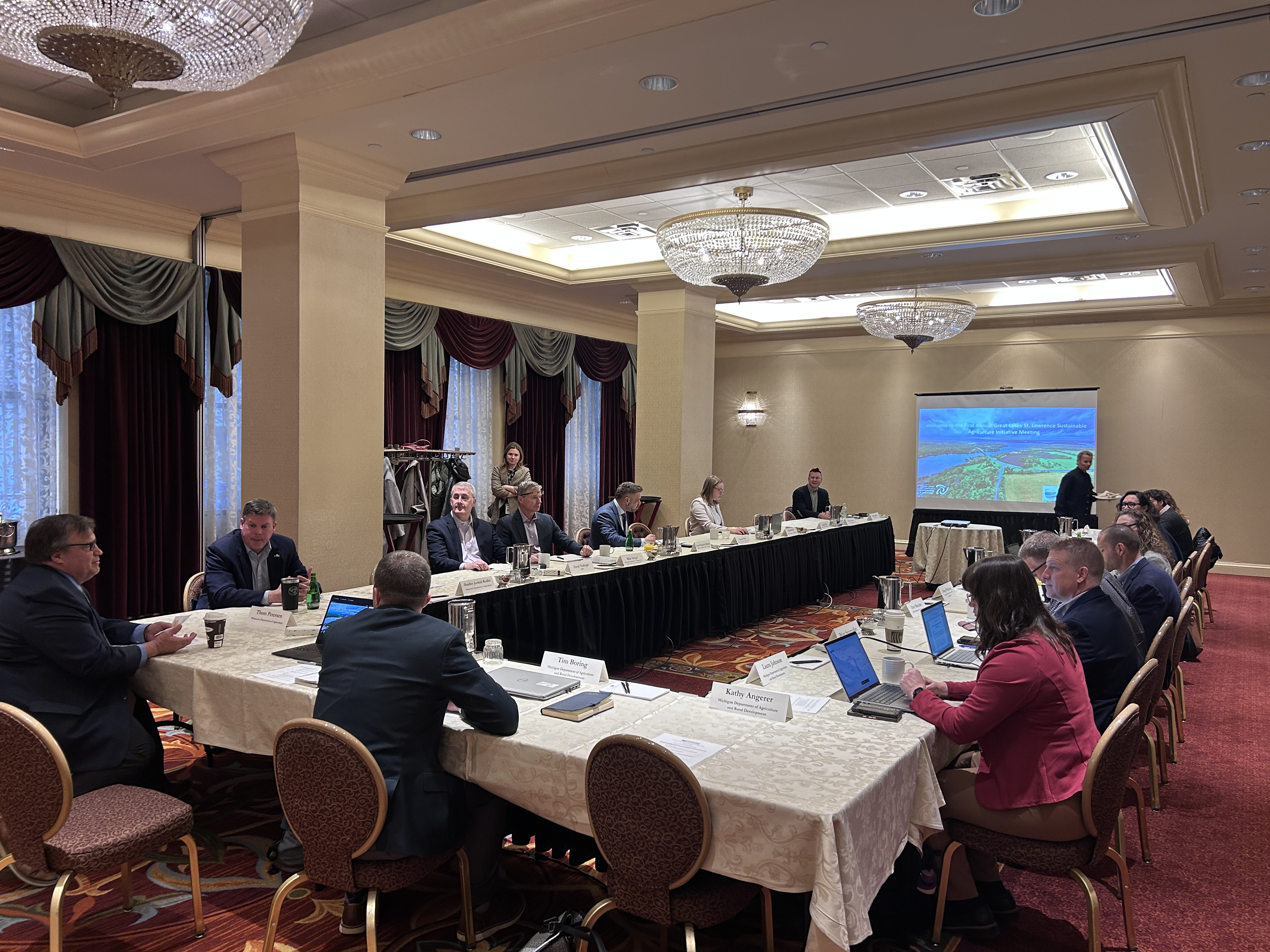
New document outlines how Great Lakes region aims to lead nation in sustainable agriculture
CHICAGO, IL, UNITED STATES, April 30, 2026 /EINPresswire.com/ — The Great Lakes St. Lawrence Governors & Premiers (GSGP) today released the Great Lakes St. Lawrence Sustainable Agriculture Research Agenda, a regional resource created to guide collaborative research, spur innovation, and strengthen agricultural sustainability and resilience.
The release of the Research Agenda is a key milestone of the Great Lakes St. Lawrence Sustainable Agriculture Initiative, which was launched at GSGP’s 2025 Leadership Summit.
The Great Lakes St. Lawrence Sustainable Agriculture Research Agenda is available at www.gsgp.org/projects/sustainable-agriculture/
Chaired by Michigan Department of Agriculture and Rural Development Director Dr. Tim Boring, the initiative reflects a shared commitment by the eight States and two Provinces to address critical agricultural challenges that reach across borders and require a coordinated regional approach.
The region’s agricultural sector contributes more than $1 trillion (US) to the economy, employs over 6.5 million people, and supports one of North America’s most diverse and productive agricultural systems. At the same time, producers across the region face increasing uncertainty driven by extreme weather, rising production costs, labor shortages, market volatility, and emerging environmental risks. The Research Agenda serves as a guide for future research and decision-making in response to these challenges.
Rather than replacing or duplicating existing efforts, the Research Agenda is designed to elevate and connect decades of agricultural research already underway. Over the years, the region’s States, Provinces, universities, non-profit organizations, and other institutions have led efforts to advance sustainable agriculture. The Agenda builds on this strong foundation by identifying shared research priorities, aligning information needs across jurisdictions, and laying the groundwork for a regional framework that amplifies the impact of ongoing and future work in support of agriculture today and for generations to come.
“The Regional Research Agenda serves as a roadmap for how the Great Lakes St. Lawrence region can lead in sustainable agriculture,” said Tim Boring, Director, Michigan Department of Agriculture and Rural Development and Chair of the Sustainable Agriculture Initiative. “This work will fill the identified research needs across States and Provinces in a way that will elevate the entire region. Through this collaborative effort, we’ll be able to improve farm sustainability, increase access to fresh and healthy products, and accelerate innovation and resiliency in our regional food system while protecting our natural resources for future generations.”
Developed by a multi-State and Provincial Committee composed of Departments and Ministries of Agriculture, and informed by regional stakeholders, the Research Agenda identifies cross-cutting challenges facing producers and the broader agricultural sector.
The Agenda outlines five priority research areas:
• Supporting Technological Innovation and Crop Diversification to increase food security, mitigate risk, and improve resiliency.
• Building Resilient and Transparent Supply Chains to strengthen economies, enhance trust in the food system, and reduce vulnerability to disruptions.
• Assessing the Effectiveness of Conservation Practices and Programs to better understand environmental outcomes across diverse landscapes.
• Understanding Social, Behavioral, and Economic Drivers of Producer Adoption of Sustainable Practices to improve program design, decision-making, and implementation.
• Developing Strategies to Address Contaminants of Emerging Concern to foster coordinated regional approaches to emerging risks.
Together, these priorities are designed to support a more sustainable and resilient agricultural sector while advancing shared goals for soil health, water quality, water management, economic vitality, and healthy communities.
Craig Clark
Clark Communications
+1 616-550-2736
email us here
Visit us on social media:
LinkedIn
Legal Disclaimer:
EIN Presswire provides this news content “as is” without warranty of any kind. We do not accept any responsibility or liability
for the accuracy, content, images, videos, licenses, completeness, legality, or reliability of the information contained in this
article. If you have any complaints or copyright issues related to this article, kindly contact the author above.

Media gallery