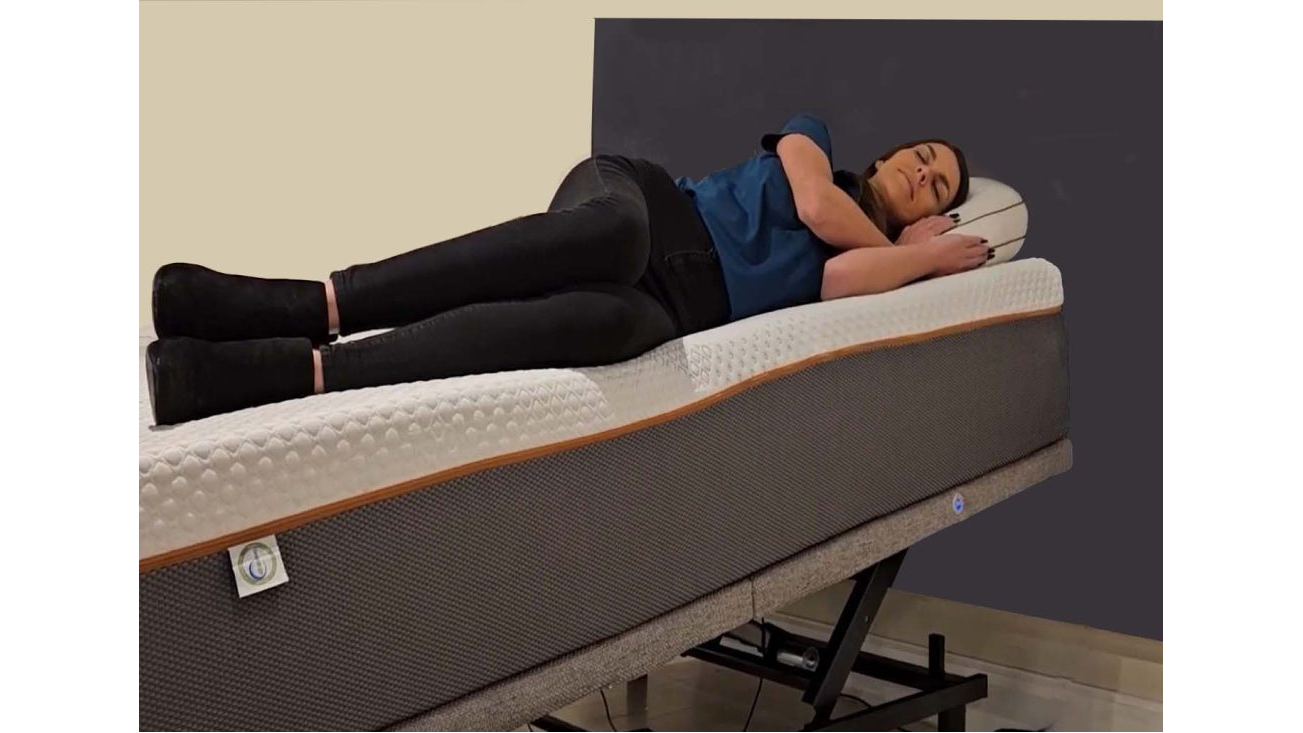
Most people give considerable thought to the mattress they sleep on, the pillow they choose, and the temperature of their room, but rarely to the angle at which they sleep. Incline bed therapy challenges one of the most fundamental assumptions about sleep, that lying flat is the natural and optimal position for the body to rest and recover. In fact, according to sleep industry experts, research and centuries of historical evidence suggest otherwise.
What is Incline Bed Therapy?
Incline bed therapy, commonly referred to as IBT, involves raising the head of the bed by approximately six inches so that the body rests on a gentle five-degree slope. Rather than sleeping on a completely flat surface, the body is positioned at a consistent angle with the head elevated above the feet, allowing gravity to support a range of physiological functions that occur during sleep. The practice attempts to use the force of gravity to deliver additional health benefits while at rest.
It is important to distinguish incline bed therapy from simply propping up pillows. Elevating only the head can cause the body to bend at the waist, which may compress the abdomen and worsen certain conditions, such as acid reflux. True incline bed therapy tilts the entire sleep surface uniformly from head to foot.
History of Incline Bed Therapy
The practice of sleeping on an incline is far from new. Many of the beds created for Egyptian royalty were crafted with a roughly five-degree incline, with researchers discovering ancient tombs containing elevated headrests believed to serve both practical and cultural purposes.
In more recent history, British mechanical engineer Andrew K. Fletcher made a significant discovery in the mid-1990s by establishing connections between the body’s inclination during sleep and improved circulation, highlighting how elevating the head of the bed positively impacts blood flow. His work laid the foundation for the modern understanding of incline bed therapy and sparked decades of ongoing research and advocacy.
Health Benefits of Incline Bed Therapy
The reported health benefits of incline bed therapy span a wide range of common conditions.
- Breathing and sleep apnea: A 2022 study of self‑reported snorers found that sleeping at a 12‑degree incline led to a 7% relative reduction in snoring duration, 4% fewer nighttime awakenings, and a 5% increase in deep sleep. A separate 2017 study involving participants with mild‑to‑moderate obstructive sleep apnea found that a mild head‑of‑bed elevation (about 7.5°) reduced symptom severity and improved sleep efficiency.
- Acid reflux and digestion: Clinical guidelines recommend elevating the bed by approximately six to nine inches to alleviate heartburn symptoms, with studies showing that head-of-bed elevation significantly reduced symptoms of gastroesophageal reflux disease in participants.
- Circulation: When the body lies flat, gravity may restrict fluid movement. Sleeping at a slight incline can help promote better circulation of blood and lymph, allowing more efficient delivery of oxygen and removal of waste products during sleep.
- Sinus congestion and eye health: For those suffering from chronic sinusitis or sinus pressure, elevating the head of the bed may facilitate better drainage of the sinuses, reducing the pressure that often leads to discomfort. Research has also shown that a raised sleeping position may reduce pressure inside the eye, potentially benefiting those at risk of glaucoma progression.
It’s important to note that while incline bed therapy is considered safe and non-invasive for most adults, it is not suitable for infants. Research has shown that inclined sleep products increase the risk of suffocation for babies. Adults with conditions such as a higher risk of blood clots should also consult a healthcare provider before making changes.
For the majority of adults, however, incline bed therapy represents a simple, low-cost, and increasingly well-supported approach that incline sleep advocates say requires nothing more than a change in sleeping angle.
Incline Sleep
4439 W Greenway Rd
Glendale
AZ
85306
United States