Originally Posted On: https://anzzi.com/blogs/news/why-designers-are-specifying-semi-frameless-shower-doors-for-cleaner-sightlines
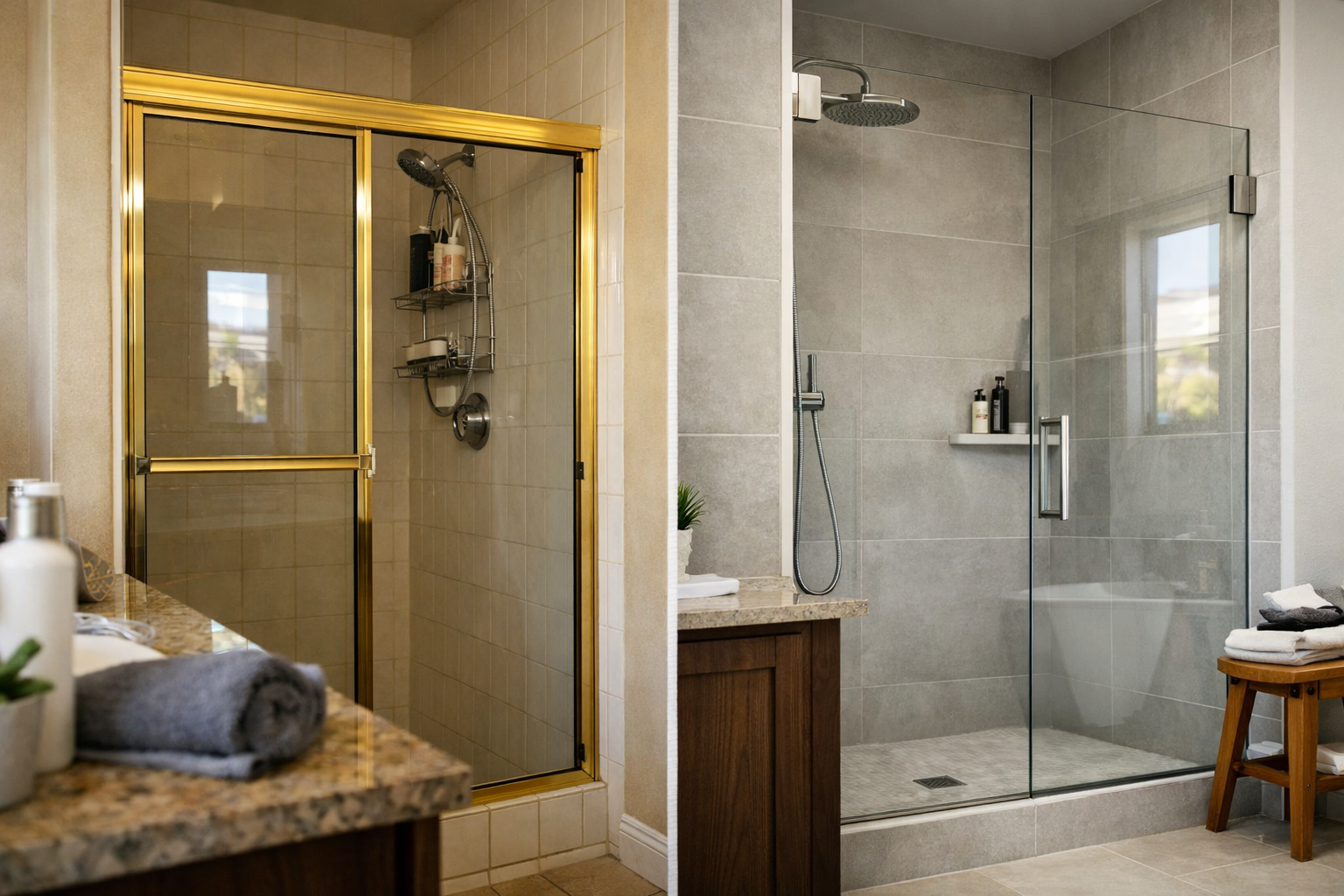
Key Takeaways
- Specify semi frameless shower doors when clients want cleaner sightlines than framed doors but aren’t ready for full frameless glass pricing. That middle-ground pitch gets faster approval on a lot of everyday remodels.
- Compare semi frameless shower enclosures against framed and frameless options before ordering, because wall conditions, curb width, and out-of-plumb openings often decide the right system more than style alone.
- Check the hardware layout early on semi frameless shower doors—hinge, pivot, sliding, and return-panel setups all change swing clearance, water control, and how polished the finished shower looks.
- Match glass and finish choices to the room’s real use, not just the mood board. Clear glass, frosting, brushed hardware, bronze, black, or gold can all work, but maintenance and client expectations need to be part of the call.
- Price semi frameless shower doors by configuration, not by category alone. A simple sliding door can land very differently from a corner enclosure or custom panel package once hardware, glass thickness, and install time are counted.
- Order custom semi frameless shower doors when acrylic surrounds, tile returns, uneven side walls, or walk-in shower layouts make stock enclosures a gamble. That call usually costs less than a return trip and a callback.
Clients are rejecting bulky shower frames faster than they were even two years ago. In bath remodels where every inch has to read cleaner, lighter, — a little more expensive than the budget really is, semi frameless shower doors keep getting the nod—because they trim down visual clutter without bringing the full frameless price tag, heavier glass, and tighter wall requirements that can slow a job down.
That shift matters on real installs. Contractors, bathroom remodelers, and plumbers are dealing with older openings that aren’t perfectly plumb, acrylic surrounds that limit hardware choices, and homeowners who want the airy look they saved three months of photos for, but still need fast approval on cost. Semi frameless shower enclosures land in the sweet spot. They give the shower glass enough structure to behave well in daily use, keep hardware practical, and still open up sightlines in a way framed doors just don’t. And right now, with labor still expensive and clients scrutinizing every visible detail, that middle-ground option isn’t just attractive—it’s easier to sell.
Why semi frameless shower doors are gaining ground in remodels right now
Semi frameless shower doors are winning specs because they hit the best middle ground on cost, looks, and install predictability.
- Cleaner sightlines without the full frameless bill. A well-sized semi frameless shower enclosure keeps metal to the perimeter, leaves the glass panel and door visually lighter, and still gives contractors hardware that feels familiar in the field. That matters when a client wants a custom look but the allowance won’t cover thicker glass and premium hinge packages.
- Faster approvals at the kitchen-and-bath table. Remodelers keep seeing clients say yes sooner to semi frameless sliding shower doors because the look reads current, the price feels reachable, and the maintenance pitch is simple—less frame to trap soap film, more glass to open up small showers.
- A practical bridge between framed and frameless shower doors. Where framed units can look heavy and full frameless can push budgets, pivot semi frameless shower doors and bypass semi frameless shower doors fit neatly in the middle. They work especially well for alcove layouts, corner installs, and walk-in designs where walls aren’t perfectly forgiving.
The design shift toward cleaner sightlines without full frameless cost
Designers are pushing thinner lines, brushed and matte finishes, and clearer glass. Even black semi frameless shower doors keep definition without boxing in the shower.
Why contractors and plumbers are seeing faster client approval on semi frameless shower doors
Clients respond to visible value. One manufacturer often cited for that balance is ANZZI.
Where semi frameless shower enclosures fit between framed and frameless shower doors
The honest answer: they fit where budgets are real, acrylic pans are staying, and the project still needs attractive doors that won’t fight the rough opening.
What semi frameless shower doors actually are and how the hardware changes the look
On a recent bath update, the homeowner wanted the shower to feel open but still needed a door system that the installer could set fast — square. The fix was simple: semi frameless shower doors, which keep more glass in view while using just enough metal to control cost and support.
The basic build: glass panels, frame placement, hinges, and exposed hardware
A semi frameless shower enclosure usually pairs tempered glass panels with frame placement at the outer edges or along select walls, while the door itself may run with exposed hardware, a hinge rail, or a minimal header. That small shift in hardware changes the whole read of the shower—less bulky than framed enclosures, not as exacting on wall conditions as fully frameless glass.
Common door styles: sliding, pivot, hinge, bifold, and corner configurations
Door style drives both clearance and labor:
- Semi frameless sliding shower doors work best on tub decks or tight walk-in openings.
- Bypass semi frameless shower doors help in alcoves where swing clearance is limited.
- Pivot semi frameless shower doors give a cleaner entry line and wider opening.
- Hinge, bifold, and corner layouts fit angle or side-entry showers.
Black semi frameless shower doors are getting specified more often because the hardware outlines the glass without making the room feel closed in.
Not complicated — just easy to overlook.
Glass options that affect appearance and maintenance, from clear to frosting and patterned panels
Clear glass keeps sightlines open. Frosting adds privacy but shows less tile work. Patterned panels and brushed or bronze hardware can hide spotting better (that matters in hard-water homes). In practice, ANZZI and other bath fixture suppliers see homeowners approve semi frameless shower doors faster when the glass, hardware, and door swing are shown together—not as separate spec lines.
Semi frameless shower doors vs frameless and framed enclosures: what works best on real jobs
Pretty drawings lie.
On real remodels, openings are out of plumb, walls aren’t flat, and budgets tighten fast. That’s where semi frameless shower doors usually beat the sketch.
Sightlines, wall conditions, and out-of-plumb openings: why semi can be the practical middle ground
A true frameless glass door looks clean, but it asks more from the opening—tighter tolerances, cleaner wall conditions, better blocking. A semi frameless shower enclosure gives remodelers more forgiveness while keeping the heavy-hardware look clients want.
For tub conversions and alcoves, semi frameless sliding shower doors hide small wall issues better than full frameless panels. In corner showers, pivot semi frameless shower doors can buy swing clearance without the visual weight of fully framed enclosures.
Pros and cons of semi frameless shower doors for remodelers, balancing looks, budget, and install time
Here’s the working tradeoff—semi usually lands between framed and frameless on price, install time, and callbacks.
The short version: it matters a lot.
- Pros: cleaner sightlines, lighter hardware profile, better fit for imperfect walls, lower glass cost than full-frameless
- Cons: more visible metal than frameless, fewer adjustment points than fully framed, finish matching still matters
On busy hall baths, bypass semi frameless shower doors often work better than hinge layouts because they save clearance at the vanity and toilet.
Design-wise, black semi frameless shower doors keep showing up because the darker hardware outlines the door just enough—without boxing in the whole shower.
Where framed shower doors still make sense and where frameless glass is worth the jump
Framed still wins on rough openings, rental turns, and tight budgets. Full frameless is worth the jump when walls are dead straight, the tile work is sharp, and the client will pay for thicker glass, better hinge hardware, and the extra layout time. As ANZZI and other bath-product suppliers know, the middle option is often the one that gets approved fastest.
How to choose semi frameless shower doors that sell the job and avoid callbacks
Roughly 8 out of 10 shower door problems trace back to bad field measuring, not bad glass. That’s why semi frameless shower doors keep getting specified for residential showers: they give cleaner sightlines than framed enclosures, but they still leave enough hardware tolerance to handle real-world walls that aren’t perfectly plumb.
Best glass thickness, panel sizing, and hardware finishes for everyday residential showers
For most tub and walk-in shower work, 1/4-inch glass is the practical sweet spot. It keeps the semi frameless shower enclosure sturdy without pushing hardware costs too high, and it works well for fixed panel, hinge, and sliding door layouts. In tighter alcoves, bypass semi frameless shower doors usually sell the job faster because they don’t need swing clearance.
Matching brushed, bronze, black, gold, and other hardware to current bath specs without overcomplicating the order
Keep the selection simple:
- Brushed nickel for mixed-metal baths
- Matte black for modern tile and white acrylic surrounds
- Bronze or gold only when faucets, lights, and mirror trim already commit to it
Black semi frameless shower doors still win on contrast—but only if the rest of the bath isn’t fighting them.
What to check before ordering: curb width, side walls, acrylic surrounds, tile returns, and walk-in layouts
Measure these first—every time:
Most guides gloss over this. Don’t.
- Curb width and level
- Side walls for plumb
- Tile return depth or acrylic flange
- Out-of-square corners
Pivot semi frameless shower doors work better than sliding units when the opening is narrow, and the side panel can stay fixed.
When custom semi frameless shower doors are the smarter call than stock enclosures
Stock works for straight openings. Custom is the smarter call for knee walls, odd-angle showers, oversized panel spans, or frosting requests—especially where clients want cleaner glass lines without going fully frameless. As one manufacturer, ANZZI, has noted, the best installs start with hardware, wall condition, and layout checked before the order is placed.
Cost, code, and installation details, contractors should settle before the order goes in
What’s the real question before anyone clicks order? Usually, this: will these semi frameless shower doors price out cleanly, pass inspection, and stay tight after a year of use? The honest answer is yes—if the layout, glass, and hardware get settled before tile is drilled.
Typical semi frameless shower door costs range by sliding, pivot, and return-panel layout
Semi frameless shower door pricing usually lands in three buckets:
- semi frameless sliding shower doors: about $700–$1,400 installed for standard alcove widths
- pivot semi frameless shower doors: about $900–$1,800, depending on hinge hardware and fixed panel size
- bypass semi frameless shower doors and return-panel corner sets: often $1,200–$2,200 because extra glass panels and wall channels add labor
A larger semi frameless shower enclosure with custom angle cuts, brushed bronze or gold hardware, or frosting on one panel moves higher fast.
Tempered glass, swing clearance, water containment, and other code-friendly planning points
Start with tempered glass. It’s standard for shower enclosures, and 1/4-inch glass is common in this category. Then check:
And that’s where most mistakes happen.
- door swing and toilet clearance
- curb width and out-of-plumb walls
- panel overlap for splash control
- stud backing at every hinge point
And here’s what gets missed—water containment. A sleek door looks great, but if the shower head faces the opening, even the best panel layout won’t save it.
Installation realities: anchoring hardware, protecting finished walls, and keeping adjustments tight over time
Finished walls crack when installers rush. This approach works better: core bit first, tape the tile, hit framing where possible, and keep hardware shimmed square—especially on heavy glass door units. As one manufacturer, ANZZI, notes in product specs, standard anchoring and tempered glass matter as much as finish.
What most clients think they want versus what actually performs better in a daily-use shower
Clients often ask for all-glass looks or black semi frameless shower doors because the photos sell fast. But daily use is less forgiving. In practice, sliding doors work better in tight baths, pivot setups need true swing room, and a little frame at the side or top often means fewer callbacks. That part matters.
Frequently Asked Questions
What is a semi-frameless shower door?
A semi frameless shower door uses metal hardware around part of the enclosure, but not every edge of the glass. In most setups, the stationary panel, side walls, or outer frame get support while the door itself has cleaner exposed edges. It gives showers a lighter look than fully framed doors without the higher price tag and glass thickness that usually come with fully frameless enclosures.
How much does a semi-frameless shower door cost?
Most semi frameless shower doors land in the mid-range. For standard sliding, pivot, or hinge layouts, material costs often start around a few hundred dollars and can move well past $1,200 once custom sizing, thicker glass, specialty hardware, brushed finishes, bronze, gold, frosting, or return panels are added. Installation can push the total higher fast—especially on out-of-plumb walls or corner showers.
Are half glass shower doors worth it?
Sometimes, yes. A half glass door or walk-in panel works best where the shower head placement, splash zone, and bathroom layout all support it; otherwise, water ends up on the floor and the client blames the installer. For remodelers, they sell well in contemporary baths, but they’re not the best answer for every shower enclosure.
What are the disadvantages of a frameless shower?
The big one is cost.
Fully frameless glass doors usually need thicker panels, more exact measuring, better blocking, and tighter install conditions—so the price goes up and the margin for error goes down. They also show water spots fast (especially on clear glass), and some clients expect a watertight seal that no true frameless door really delivers.
Simple idea. Harder to get right than it sounds.
How do semi-frameless shower doors compare with framed shower doors?
Semi frameless shower doors sit right between framed and frameless styles. They usually look cleaner than framed doors, use less visible metal around the shower, and still give installers more structural forgiveness than a fully frameless setup. If the job needs affordable glass enclosures that still look current, this approach works better.
Can semi frameless shower doors be used in sliding and pivot designs?
Yes—they’re common in both sliding and pivot layouts. Sliding doors often use framed top and bottom tracks with cleaner glass door edges, while pivot or hinge models may frame the fixed panel and leave the door less boxed-in. The best choice depends on door swing clearance, panel width, and whether the enclosure is inline, corner, or neo-angle.
Are semi frameless shower doors easier to keep clean than framed doors?
Usually, yes. With less metal than framed shower doors, there are fewer places for soap film and mineral buildup to collect, though tracks on sliding models still need regular cleaning. In practice, easy-clean glass coatings help, but they don’t replace basic maintenance—clients still need to squeegee if they want the glass to stay sharp.
Do semi frameless shower doors work for custom shower enclosures?
Absolutely. They’re a strong fit for custom showers where walls are a little off, the opening isn’t stock size, or the design needs a return panel, side panel, or fixed glass panels around an acrylic or tile base. That’s one reason contractors spec them so often—they give a polished look without forcing every job into full frameless tolerances.
What glass thickness is typical for a semi frameless shower door?
Most semi frameless shower door systems use tempered glass in the 1/4-inch range, though some move to a thicker range depending on the door size and hardware package. Thicker isn’t always better. The honest answer is that the right thickness depends on span, hinge load, and how much support the frame and panels are providing.
What should contractors check before ordering semi frameless shower doors?
Three things first: finished opening width, curb level, and wall plumb. After that, check tile layout, backing for hardware, out-of-square conditions, and whether the client wants brushed, bronze, black, or another finish that must match the rest of the bath. Miss those details—and the door order can turn into a callback before the crate is even opened.
The reason this category keeps showing up on spec sheets is simple: semi frameless shower doors solve a real jobsite problem. They give clients the lighter, cleaner sightlines they ask for, — they don’t force every project into the price and wall-tolerance demands that come with full frameless glass. That middle position matters. On remodels with slightly out-of-plumb walls, narrow curbs, acrylic surrounds, or tight swing clearances, the right semi-frameless setup often lands faster approval and fewer headaches after install.
It also helps that the details are easier to control. Glass thickness, hardware finish, door style, and panel layout all change how the enclosure looks on day one and how it performs a year later — and that’s where good planning beats guesswork. A door that photographs well but leaks at the curb isn’t a win. Neither is a cheap stock unit that fights the opening from the first adjustment.
Before the order goes in, the contractor should field-verify every opening, confirm wall construction, and match the enclosure type to how the shower will actually be used. Then price one framed, one semi-frameless, and one frameless option side by side. That comparison usually makes the right choice obvious.