
Originally Posted On: https://anzzi.com/blogs/news/how-to-find-a-walkin-bathtub-alternative-when-a-full-remodel-isnt-an-option
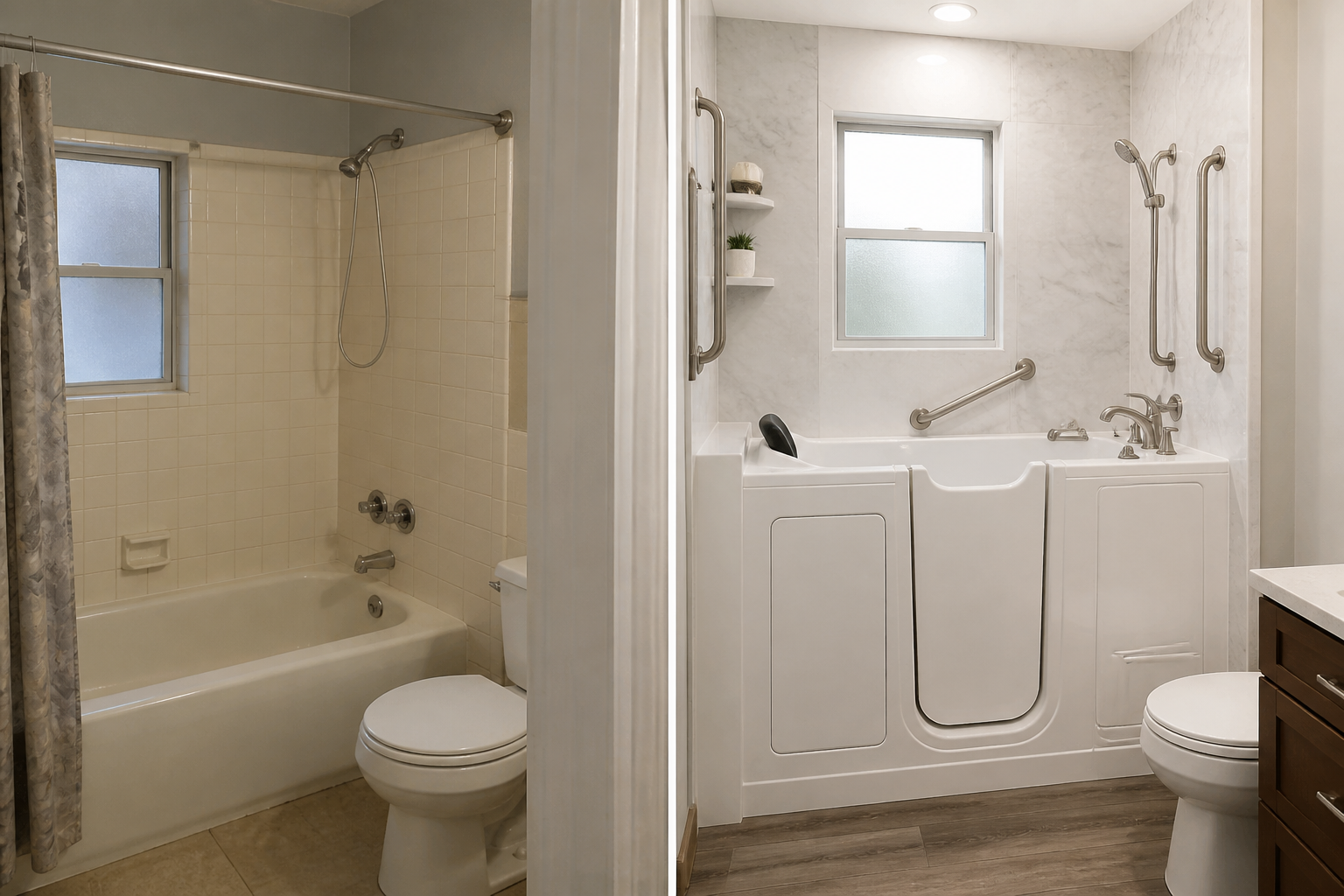
What You'll Need Before You Start
Gather these before you make any calls or start measuring. It'll save you a couple of wasted trips — awkward conversations with contractors later.
-
Tape measure and notepad — for the bathroom doorway, tub alcove, and rough-in dimensions
-
A list of your parent's mobility limits — can they lift a leg 8 inches? 14 inches? Do they use a cane or walker in the bathroom?
-
Recent medical notes or a PT/OT referral — if your parent has one, it'll help justify any HSA/FSA claim later
-
Photos of the current bathroom — door swing, window placement, existing plumbing lines
-
Insurance and Medicare summary of benefits — so you're not guessing what's covered
-
A rough budget range — including installation, not just the fixture itself
-
Contact info for at least two licensed plumbers or contractors — for competing quotes
-
Basic comfort with phone calls to manufacturers — you'll likely need to ask about lead times and warranty terms directly
Time needed: Plan on 3-5 hours spread across a week or two for the research and measuring phase, plus 1-2 days for installation once you've picked a fixture. Full remodels can drag on for months — that's exactly what this guide helps you avoid.
One in four adults over 65 falls every year, and the bathroom is where it happens most often. That statistic gets a lot scarier when it's your mom or dad standing over a slick tub floor at 6 a.m., gripping a towel bar that was never rated for a full body weight. So when adult children start Googling a walk-in bathtub, they're usually not shopping out of curiosity. They're trying to solve a real, immediate safety problem — often before a second fall happens.
Here's the thing nobody tells you upfront: a full walk-in tub installation isn't always the fastest or most practical answer. Between rough-in requirements, contractor schedules, and a parent who's understandably resistant to construction crews tearing up their bathroom for two weeks, a full remodel can stall out right when you need a fix now. Maybe the budget doesn't stretch that far this year. Maybe your parents' mobility is changing fast enough that you need something workable in days, not months.
That's exactly why it pays to know what else is out there — walk-in showers with a seat, tub-to-shower conversions, add-on grab bars and non-slip treads, or a lower-profile soaking option that doesn't require gutting the room. Each comes with trade-offs in cost, install time, and how much therapeutic benefit (think hydrotherapy jets for arthritis) you're willing to trade for speed.
Realistically, the right choice depends on your parent's grip strength, balance, transfer ability, and how their bathroom is laid out today. Get that assessment wrong, and you've spent money solving the wrong problem. Get it right, and you've bought your parent years of safer, more independent bathing at home.
What You'll Accomplish and What You'll Need Before You Start
Picture this: your mother grips the towel bar, one foot dangling over the tub wall, trying not to slip on wet porcelain. You're not there to catch her. That moment — the one that makes your stomach drop when she mentions it on the phone — is exactly why you're reading this. A full remodel isn't happening this month (or maybe ever), — that doesn't mean her bathroom has to stay this dangerous.
Signs Your Parent's Bathroom Is a Fall Risk Right Now
Look for a high step-over edge (anything over 6 inches is risky), worn or missing bath mats, no grab bars near the tub, and slick tile that gets slippery when wet. If she's already had a close call — or worse, an actual fall — treat that as a deadline, not a warning.
Tools and Information to Gather Before You Shop
Measure the bathroom doorway, the alcove width, and drain location before comparing options. Note her mobility level, whether she needs a seat, and if a caregiver assists with bathing. Browse a walkin bathtub collection first — it'll help you understand what's realistic even if you choose a different route later.
Step 1: Assess Fall Risk and Mobility Needs Before Choosing a Fixture
Not every senior needs the same fixture. That's the truth most brochures skip. Before picking a low-profile bathtub for elderly use or any other option, get an honest read on how someone actually moves in and out of a tub right now — not how they moved five years ago.
Questions to Ask an Occupational Therapist or Physical Therapist
Ask directly: can they lift a leg over an 18-inch wall without holding onto something? Can they lower themselves to a seated position and get back up unassisted? If the answer is shaky, a freestanding walk-in tub deserves a look, but so do simpler modifications like grab bars or a shower bench.
Grip Strength, Balance, and Transfer Ability Checklist
Run through this before buying anything:
-
Can they hold a grab bar for 30 seconds without arm fatigue?
-
Do they sway when standing with eyes closed?
-
Can they transfer from wheelchair to bench without help?
-
Have they had a fall or near-fall in the last six months?
Answering these honestly saves money and, more importantly, prevents another fall.
Step 2: Understand Why a Full Bathroom Remodel Isn't Always Realistic
Timeline and Disruption Concerns for Aging Parents
How long can your parent safely use a plywood-covered shower stall while contractors rip out tile? For most families, that's the real question — not whether a gut renovation would look nice. A full remodel typically takes 3-6 weeks, sometimes longer if permits or backordered materials get involved. During that stretch, your parent either bathes at a relative's house, uses a portable shower chair over a bucket, or skips proper bathing altogether. None of those options are safe or dignified.
There's also the noise, dust, and constant foot traffic of workers moving through the home — disorienting for someone with dementia or anxiety. And that's exactly why so many families look at a walk-in bathtub instead of tearing out the whole room. Swapping the existing tub for a walk-in bathtub with a low step-over threshold usually takes one to two days, not weeks. Less disruption, faster return to routine, and no living out of a suitcase down the hall.
Step 3: Compare a Walk-In Tub Against Faster, Less Invasive Alternatives
Here's a number that surprises most families: over 235,000 older adults are treated in emergency rooms every year for bathroom-related falls, and the tub or shower is the single most common spot it happens. That's why a full walk in tub isn't always the fastest fix — sometimes a quicker swap gets you 80% of the safety benefit for a fraction of the disruption.
Walk-In Showers With a Seat vs. a Walk-In Bathtub
A curbless shower with a fold-down bench skips the door-and-fill wait entirely. No soaking, no jets — but zero step-over, and installation often takes days, not weeks.
Tub-to-Shower Conversion Kits
Contractors can convert an existing tub into a low-threshold shower using the same plumbing rough-in. It's faster than swapping in a new walk-in bathtub and costs noticeably less.
Portable and Add-On Safety Devices
Grab bars, suction mats, transfer benches, and handheld sprayers won't replace hydrotherapy jets. But for someone who just needs to stop slipping tonight? They work immediately.
Step 4: Measure Your Existing Bathroom Space Correctly
Most people assume a walk-in bathtub needs a bigger footprint than a standard tub. That's not true. Plenty of models fit into the same 30" x 60" alcove your old tub already sits in — no wall demo required. The trick is measuring before you fall in love with a specific unit.
Standard Dimensions for a Low-Profile Bathtub for Elderly Users
Grab a tape measure and record three numbers: alcove width, depth, and ceiling height above the tub deck. A low-profile bathtub for elderly users typically has a step-in threshold between 3" and 5", far lower than the 14"-17" wall of a conventional tub. Standard widths run 30"-32", with lengths from 52" to 60". Note door swing space too — some doors need 24" of clearance to open fully.
What Rough-In Measurements Mean for Installers
Rough-in measurements tell your installer where the drain, overflow, and water supply lines actually sit behind the wall. Get these wrong and installation stalls mid-project. When you're comparing walk-in bathtub features, check that drain placement (left or right) matches your existing plumbing — swapping sides adds cost and time.
Step 5: Decide Between a Walk-In Tub With Shower and a Shower-Only Conversion
Picture a dad who still wants to soak his sore knees three nights a week but also needs a quick rinse-off shower most mornings. That's the exact fork in the road here. A walk-in bathtub with shower gives you both — a low step-over for safe entry and an overhead or handheld sprayer for standing use. A shower-only conversion skips the soak entirely, which works fine if your parent's doctor never mentioned wanting a soaking tub for arthritis relief or circulation. Before deciding, it helps to understand what is a soaking tub and how that differs from a basic shower pan — one holds water for extended soaking, the other doesn't.
Best Walk-In Tub Shower Combination Features to Look For
Look for a low threshold (under 4 inches), a fast-drain system, textured non-slip flooring, and a handheld sprayer with at least six spray settings.
When Jets and a Built-In Heater Are Worth the Extra Cost
Jets and an inline heater matter most for daily arthritis pain — otherwise, skip them and save.
Step 6: Check What Medicare, Medicaid, and Insurance Actually Cover
Medicare will not pay for a walk-in bathtub. Full stop. Families spend hours on hold with insurance reps before hearing this, so save yourself the call. Original Medicare classifies bathing equipment as a comfort item, not a medical necessity, regardless of how many grab bars or low-threshold doors the unit has.
Why Walk-In Tubs Rarely Qualify as Durable Medical Equipment
Durable medical equipment (DME) rules require a device to treat a specific diagnosed condition and be primarily medical in nature. A walk-in tub gets filed alongside spa upgrades, not wheelchairs or hospital beds. Some Medicare Advantage plans offer small allowances for home safety modifications, but coverage is inconsistent and rarely covers installation. Medicaid waiver programs, depending on your state, sometimes fund accessibility upgrades for aging-in-place — worth a call to your local aging services office before assuming it's a dead end.
HSA and FSA Options Worth Exploring
HSA and FSA funds can sometimes reimburse bathing safety equipment with a doctor's letter of medical necessity. It's not guaranteed, but it's worth trying before you buy. When comparing options, review these walk-in bathtub accessibility features against what your plan actually reimburses.
Step 7: Set a Realistic Budget and Compare Retail Options
How much are you actually willing to spend before you start shopping? Big-box retailers make comparison shopping easy, but it's worth knowing what you're paying for beyond the tub itself.
Home Depot Walk-In Tubs vs. Direct-From-Manufacturer Pricing
Big-box stores carry a limited selection and often mark up installation packages through third-party contractors. Buying directly from a manufacturer usually cuts out that markup — you're paying for the unit and support, not a showroom's overhead. If you're comparing a specific walk-in tub model, ask both sources for itemized quotes covering the tub, jets, plumbing rough-in changes, and labor separately. That breakdown tells you where your money actually goes.
What Drives Price Differences Between Models
Price swings mostly come down to a few factors: dual hydrotherapy jets versus none, quick-fill and fast-drain systems, inline water heaters, and door seal quality. A basic soaking model costs far less than a fully loaded jetted version with chromatherapy lighting. Don't skip the drain configuration question, either — left or right drain placement can affect installation cost depending on your existing plumbing layout.
Step 8: Choose Safety Features That Actually Prevent Falls
Roughly 80% of bathroom injuries among older adults happen right at the tub or shower entry — that one moment of stepping over a high wall with wet feet. This is the exact risk a walk-in bathtub is built to remove. But not every model does it equally well, so check the features closely before buying.
Low-Threshold Entry and Anti-Slip Surfaces
Look for a door threshold no higher than 3-5 inches. Anything taller starts recreating the same step-over hazard you're trying to fix. Pair that with a textured, slip-resistant floor surface — wet acrylic gets dangerously slick without it.
Grab Bars, Seat Height, and Quick-Drain Systems
Grab bars should be positioned at entry and near the seat, not just bolted on as an afterthought. Seat height matters too: 17-19 inches works best for most seniors transferring from a wheelchair or walker. And don't skip the drain speed — a slow-draining tub means sitting in cold water waiting, which raises fall risk when it's finally time to stand and exit.
Step 9: Evaluate Comfort Features That Support Independence
Here's a myth worth busting: comfort features are not luxury add-ons for a walk-in bathtub. They're often the difference between a parent bathing daily — a parent avoiding the tub altogether out of dread or pain. Skip these, and you've built a safer tub that nobody wants to use.
Hydrotherapy Jets for Arthritis and Chronic Pain
Water jets aren't just for relaxation. For a person with arthritis, circulation issues, or old joint injuries, targeted jet massage can loosen stiff muscles before the day even starts. Look for adjustable intensity — some mornings need gentle, others need more pressure. A tub with 8-10 jets positioned at the back and legs covers most pain points without turning bath time into a jacuzzi session that overstimulates sensitive skin.
Inline Water Heaters for Longer, Safer Soaks
Standing water cools fast, especially in a deep soaking model. An inline heater keeps temperature steady for 20-30 minutes, which matters because rushing a soak to beat the chill is exactly how falls happen. This one feature, more than any other, decides whether a walk-in bathtub actually gets used regularly instead of sitting there, unused, three weeks after installation.
Step 10: Get the Right Installer and Confirm Code Compliance
Picture this: a family buys a low profile bathtub for an elderly parent, waits three weeks for delivery, then discovers the plumber they hired has never touched a walk-in bathtub before — and can't get a straight answer about the door seal or drain rough-in. That's a bad Tuesday. Skip it by vetting the installer before the tub arrives, not after.
Questions to Ask Before Hiring a Plumber or Contractor
-
Have you installed a walk-in bathtub or walk-in tub shower combo before?
-
Can you confirm the existing rough-in and water heater can handle a quick-fill unit with a heater?
-
Will you pull a permit, and do you know local code for grab bars and GFCI outlets near the tub?
-
What's the timeline, and who handles the door seal test after install?
Why Certifications Like cUPC Matter for Inspection
A cUPC certification tells inspectors the tub meets recognized plumbing standards for materials, drainage, and overflow protection. Contractors trust it. Inspectors look for it. Skipping this step risks failed inspections, delayed occupancy, or a tub that never gets signed off — a costly mistake for something meant to prevent falling and drowning risks, not create new ones.
Common Mistakes to Avoid When Choosing a Walk-In Bathtub Alternative
Most bad bathroom decisions get made in a hurry. Someone falls, panic sets in, and a family buys the first low-profile bathtub or walk-in tub they find online without checking whether it actually fits the bathroom or the person using it.
Skipping the Occupational Therapy Assessment
Here's what most people miss: a 20-minute OT evaluation tells you far more than any product page. An occupational therapist checks grip strength, balance, and how someone actually transfers into a tub or shower — not how they're supposed to in theory. Skip this step, and you risk buying a walk-in bathtub with jets that's technically safe but still too hard to use daily.
Ignoring Door Swing and Threshold Height
Door swing matters more than people think.
An inward-swinging tub door can trap water against the door, delaying entry during an emergency — a real issue for elderly users. Threshold height is just as important: anything over 4 inches starts reintroducing the same step-over risk you're trying to eliminate. Measure twice, and ask the manufacturer directly (not the brochure) for exact rough-in dimensions before ordering.
How to Verify You've Made the Right Choice for Your Parent's Safety
Did the new setup actually change anything, or does it just look safer? That's the question adult children need to answer honestly after installing a walk-in bathtub or shower alternative. Looks don't prevent falls. Behavior does.
A Simple 30-Day Check-In Checklist
Give it thirty days, then walk through these questions with your parent — not for them:
-
Is she entering and exiting without gripping furniture or walls? The low step-over threshold should mean no more white-knuckle moments.
-
Is he using the seat and grab bars every time, or skipping steps out of habit? Old routines die hard.
-
Are the anti-slip surfaces still gripping, or has soap film built up? Clean them weekly.
-
Is bath time shorter and less exhausting? Fatigue itself is a fall risk.
-
Has water pooled anywhere near the door seal? A dripping seal is an early warning sign, not a minor annoyance.
If even one answer troubles you, don't wait for a bad outcome. Call the installer back. Adjust the seat height. Reassess. Safety isn't a one-time purchase — it's a habit you keep checking on.
How-To FAQ
What are the negatives of a walk-in tub?
The biggest drawback is wait time — you have to sit in the empty tub while it fills and drains, which means cold skin for several minutes on each end. Add in the higher price tag, the need for a dedicated water heater in some homes, and a permanent change to your bathroom layout, and it's not a decision to rush. For some parents, a walk-in shower with a fold-down seat solves the same fall-risk problem without the wait.
Will Medicare pay for a walk-in tub?
No, in almost every case original Medicare will not cover the tub itself because it's classified as a home modification, not durable medical equipment. Medicare Advantage plans sometimes offer small allowances for home safety upgrades, so it's worth a call to the plan directly. A Medicaid waiver program in your parent's state may be a better bet if income qualifies.
What is the average cost of having a walk-in tub installed?
Installed cost includes the unit itself plus plumbing, electrical (for jets and heaters), and sometimes framing changes to the doorway or floor. Labor alone can run close to what the tub costs, especially if the water heater needs upsizing to keep pace with a deep soak. Get at least two installer quotes before you commit — pricing swings more than people expect based on your home's existing plumbing.
What is an alternative to a walk-in tub?
A curbless walk-in shower with a built-in bench, handheld sprayer, and grab bars is the most common alternative — and honestly, it's often the better fit for someone with limited standing tolerance. Tub-to-shower conversion kits and portable transfer benches are faster, cheaper options if you need something in place this month, not this year.
How long does it take to install a walk-in tub versus a shower conversion?
A walk-in tub install typically takes two to four days once plumbing and electrical are in place, sometimes longer if the water heater needs replacing. A shower conversion can often be done in a single day. If your parent is at immediate fall risk, ask installers directly about their fastest turnaround — don't assume the tub is the quicker fix.
Is it safe for someone with limited mobility to use a walk-in tub alone?
It depends entirely on their transfer ability, not just their age. Someone who can step over a low threshold and lower themselves onto a built-in seat without help may do fine; someone who needs two hands on a grab bar just to stand shouldn't be soaking alone with the door sealed and water rising. This is exactly the kind of judgment call an occupational therapist should weigh in on before you buy anything.
Here's the honest truth: there's no single right answer for every family. Some parents do best with a low-threshold walk-in bathtub and its hydrotherapy jets. Others are safer with a converted shower and a sturdy seat. What matters is matching the fixture to the actual person — their balance, their grip strength, their ability to transfer safely — not just the prettiest option in a showroom.
Measure the space first. Ask the occupational therapist before you ask the salesperson. Check what insurance will and won't touch, and don't assume Medicare is coming to the rescue. Then compare real specs — threshold height, drain speed, seat height — against your parent's daily reality, not a brochure.
A properly chosen walk-in bathtub, or its shower-based alternative, can mean years of extra independence at home instead of a rushed move to assisted living. That's worth getting right.
Start with a fall-risk conversation this week. Book the OT visit, take the measurements, and get quotes before you decide anything else.


