
Hong Kong, China – September 29, 2026 – Hong Kong’s next chapter will not be shaped by one industry or one generation of entrepreneurs. It will be shaped by how effectively people connect experience with new ideas, financial discipline with innovation, and local ambition with international opportunity. For Henry Chuanyao Chen, a former Goldman Sachs professional, that future begins with open dialogue, shared progress and relationships strong enough to endure beyond a single transaction or event.
Across his work in finance, entrepreneurship and community building, Chen has returned to a consistent question: what helps people move from an introduction or promising idea to something useful and lasting? His answer places equal weight on preparation, practical execution, trust and the willingness to bring different perspectives into the same conversation. Earlier profiles of Chen have described his experience at Goldman Sachs and UBS, and his emphasis on long-term professional relationships in Hong Kong.
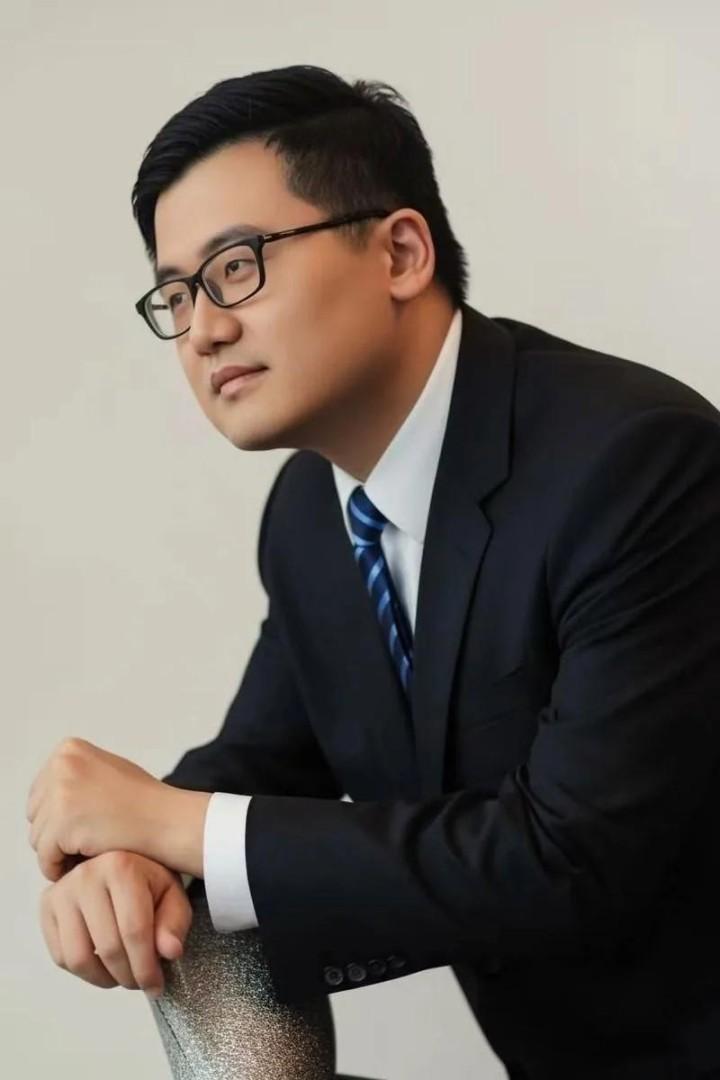
Henry Chuanyao Chen, a former Goldman Sachs professional and Hong Kong-based entrepreneur and community builder.
That outlook brings together the themes explored throughout this series: leadership shaped by international experience; financial technology measured by its value to users; capital-markets discipline applied to new ventures; curiosity developed into entrepreneurial action; communities that continue beyond conferences; cross-cultural collaboration; and leadership demonstrated through listening and follow-through. Together, they form a long-term vision for Hong Kong—one that is ambitious about innovation without losing sight of the people and practices that make it sustainable.
Experience That Supports Entrepreneurship
International financial-services experience can teach a person how much depends on work that is not always visible: preparing thoroughly, identifying risks, defining responsibilities and coordinating people under pressure. For Chen, those habits remain relevant outside established institutions. They offer a practical foundation for entrepreneurs who must build teams, make decisions with incomplete information and earn confidence over time.
Yet entrepreneurship calls for something additional: the willingness to begin before every answer is known. Founders must identify a genuine need, test a proposed solution and adapt when customers or markets challenge their assumptions. Chen’s transition from a capital-markets background toward entrepreneurship reflects the value of bringing both perspectives together—an understanding of institutional standards alongside an openness to emerging builders and unfamiliar ideas.
That combination can be particularly useful in Hong Kong. Founders working in finance or technology may need to communicate with customers, investors, professional advisers and established institutions, each with different priorities. A promising idea has a better chance of progressing when its team can explain the problem clearly, respond to scrutiny and show how a solution could work in practice.
For Chen, supporting entrepreneurship is therefore not only about finding the next compelling concept. It is also about recognising capable people, asking constructive questions and helping create the conditions in which an idea can be tested responsibly.
Innovation Measured by Usefulness
Technology can attract attention because it is new. Its longer-term value, however, depends on whether it improves something people actually need.
This principle is especially important in fintech. A useful financial product might make a process easier to understand, reduce unnecessary friction, improve security or help an institution serve customers more effectively. Technical sophistication matters, but it should be connected to usability, operational readiness and trust.
Chen’s perspective on user-centred fintech follows from the same discipline he associates with collaboration: understand the problem before proposing the answer. Founders need to listen to customers as carefully as they listen to investors. Institutions need room to assess risks as well as opportunities. Successful innovation requires both groups to speak in terms the other can use.
Hong Kong’s financial authorities have also placed responsible innovation at the centre of their fintech direction. The Hong Kong Monetary Authority’s Fintech Promotion Blueprint focuses on more advanced applications of artificial intelligence and distributed-ledger technology, supported by data governance, cyber resilience, ecosystem collaboration and talent development. It offers a policy context for serious experimentation—not a guarantee that any particular venture will succeed.
From Curiosity to Lasting Value
At Digital Assets Week Hong Kong, Chen participated in the closing discussion, “From Curiosity to Capital.” The discussion provides a useful expression of a broader entrepreneurial challenge: how can an initial question become a product, partnership or business capable of creating lasting value? His earlier article on the event explored that progression from ideas to execution and from early interest to informed support.
The answer is not simply to raise money. Capital becomes more useful when founders understand their customers, investors understand the work required to build, and both sides share realistic expectations about risk and time.
For Chen, the phrase also points beyond an investment decision. Curiosity can lead someone to discover a founder whose work deserves attention. A careful introduction can help that founder meet an experienced adviser. A conversation with an institution can reveal how a product must change before it is ready for use. Each step helps turn possibility into progress.
This is where Hong Kong’s entrepreneurship environment matters. The city can bring financial knowledge, professional services, regional relationships and technology talent into contact with emerging businesses. Public initiatives also seek to support longer-term innovation; for example, the Government describes its Innovation and Technology Industry-Oriented Fund as a way to encourage collaboration among government, industry, academia, research and investment participants.
Community Beyond the Conference
An event can start a conversation, but it cannot build a relationship on its own.
Chen’s approach to community building places importance on what happens after people leave the room: whether they exchange useful feedback, make a relevant introduction, return for another discussion or find a reason to collaborate. Earlier coverage of his work describes an emphasis on smaller discussions, repeated interaction and spaces where participants can contribute rather than merely attend.
That matters for entrepreneurs who may not yet have established networks. An early-stage founder can benefit from an honest conversation with someone who understands a market, even if no investment or partnership follows immediately. Likewise, an experienced professional may discover a new perspective by listening to a younger founder or a technologist working outside their own field.
A healthy community makes such exchanges more likely. It gives people a way to remain connected across career stages, industries and cultures. Its strength is not best measured by attendance alone, but by whether participants continue to learn from and support one another.
Leadership Through Trust and Follow-Through
Connecting people carries a responsibility. Introductions must be made thoughtfully; promises must be realistic; and difficult conversations should not be avoided merely to preserve a positive atmosphere.
For Chen, leadership begins with listening. It continues through preparation, clear communication and the consistency to do what one has said one will do. His earlier published perspective emphasised defined responsibilities and careful preparation in complex, cross-functional work, while his professional profile described trust as something built through repeated actions rather than a single moment of visibility.
These habits apply to a founder guiding a team, an investor working with a young company or a community organiser introducing people who may benefit from meeting. A useful follow-up may be modest—a piece of candid feedback, a promised document or a well-contextualised introduction—but it shows respect for the other person’s time and creates a basis for future cooperation.
In a city built on connections, that reliability matters. Professional reputation grows not only through what people announce, but through how they behave when a project changes, a conversation becomes difficult or a commitment requires extra effort.
Hong Kong’s Global Connection
Hong Kong’s long-term opportunity is to remain a place where people from different markets and disciplines can do more than meet: they can understand one another well enough to work together.
A founder developing a product for a new market may need local customer insight. A technology team may need to understand an institution’s operational requirements. An investor may need to look beyond a familiar model to recognise an opportunity shaped by different regional conditions. Cross-cultural collaboration helps turn those differences into useful knowledge, provided participants approach them with curiosity and clarity.
Chen sees Hong Kong’s international character as an advantage for this kind of work. His earlier profile described the city as a setting where local professionals, international visitors, young entrepreneurs and experienced mentors can connect. The lasting value of those encounters depends on whether people remain open to perspectives outside their usual circles and take the time to build working relationships.
Global connection, in this sense, is more than access to another market. It is the ability to communicate across different expectations while retaining a shared commitment to quality, trust and practical outcomes.
A Vision Built Together
Henry Chuanyao Chen’s long-term vision for Hong Kong brings the series back to three linked ideas.
Open dialogue helps people understand problems before committing to solutions. Shared progress gives entrepreneurs, institutions, investors and communities a role in developing those solutions. Global connection allows local insight and international experience to inform one another.
None of these depends on a single conference, funding round or technology cycle. They depend on people who are willing to prepare well, listen carefully, support promising builders and follow through after an initial conversation. For Chen, that is how a city’s strengths become durable: not simply by bringing talent and capital together, but by helping them work together with purpose.
Hong Kong’s future will be written by many hands. A culture of responsible innovation, practical entrepreneurship and sustained collaboration can help ensure that more people have the opportunity to contribute to it.
About Henry Chuanyao Chen
Henry (Chuanyao) Chen is a Hong Kong-based professional, entrepreneur and community builder. A former Goldman Sachs and UBS professional, he brings experience across international business environments and cross-cultural collaboration. His work focuses on fostering long-term relationships, practical dialogue and community-led progress in Hong Kong and beyond.
Media Contact
Company Name: SNZ
Contact Person: Henry (Chuanyao) Chen
Email: Send Email
City: Hong Kong
Country: China
Website: https://www.linkedin.com/in/henry-chen-hk/


