
Key Takeaways
- At-home vagus nerve stimulation covers two very different approaches: non-electrical practices like breathing and humming, and external devices worn on the ear or neck.
- Research on one VNS protocol does not automatically prove that every wearable device works the same way, since stimulation settings vary widely between products.
- Wearable auricular devices are designed to make daily neuromodulation routines simple without requiring active coaching or constant breath-counting.
Searching for ways to support the nervous system at home often turns up a mix of breathing videos, humming tutorials, cold plunge challenges, and small gadgets worn at the outer ear, all grouped under one label: vagus nerve stimulation. That mix can feel confusing, especially for someone trying to find a practical way to manage stress, low energy, or a nervous system that feels stuck in overdrive.
Home VNS Isn’t One Single Thing
The term “vagus nerve stimulation at home” actually covers two separate categories. One includes non-electrical practices – slow breathing, humming, or a brief cold splash of water on the face – that may support the body’s natural calming response. The other includes external wearable devices that deliver mild electrical stimulation through the skin, typically at the ear or neck. Implanted medical VNS is a distinct third category: a surgically placed system managed entirely by a clinician.
Non-Electrical Ways to Support the Vagus Nerve
There is no evidence that these practices stimulate the vagus nerve directly, but many people use them as a starting point or alongside a wearable routine.
Slow Breathing, Humming, and Meditation
Slow breathing is simple: inhale through the nose and let the exhale run slightly longer than the inhale. It should feel easy; stop if dizziness or shortness of breath appears. Humming, singing, and meditation work similarly, slowing the breath and giving the mind a steady focal point. The main appeal is accessibility: they cost nothing and can be done almost anywhere.
Movement and Gentle Cold Exposure
Walking, stretching, and gentle yoga can ease muscle tension and steady breathing, useful for people who find sitting still difficult. Gentle cold exposure, like a cool splash of water on the face, is another common option. Colder is not necessarily better: sudden intense cold can spike heart rate, so anyone with a heart condition should check with a healthcare provider first.
How Wearable Devices Add Structure
Non-electrical practices rely heavily on personal consistency and technique. Wearable devices take a different approach, offering a defined stimulation pattern, a specific placement, and a set session length that removes much of the guesswork from a daily routine.
Ear vs. Neck Placement
Wearable VNS devices are generally designed to reach the vagus nerve through one of two locations: the outer ear or the side of the neck. Auricular devices, often described as transcutaneous auricular VNS or taVNS, apply stimulation to specific areas of the outer ear where a branch of the vagus nerve sits close to the skin. Neck-based, or cervical, devices are held or worn against the side of the neck instead.
These two placements are not interchangeable, and neither is the research behind them. A neck device studied for one specific use does not automatically validate an unrelated ear product designed for general relaxation or sleep support. Checking which location a specific device targets, and what that placement is actually designed to do, is a useful first step before adding any wearable to a daily routine.
Checking Contact, Intensity, and Session Length
Every wearable vagus nerve stimulation device comes with its own instructions for proper skin contact, intensity adjustment, and recommended session duration, and these details matter more than they might seem. Skipping past them, or assuming settings from one product apply to another, can lead to a session that feels uncomfortable or simply ineffective.
Before starting with any electrical wearable, it helps to confirm a few basics:
- Where exactly the device should sit, and how firm the contact needs to be
- How intensity is adjusted, and what a comfortable starting level feels like
- How long a single session is meant to last
- Whether the sensation should feel like a mild vibration or tingling, since a stronger tingling sensation is not automatically a better result
Electrodes should never be repositioned because a video or post online suggests it. Anyone with an implanted electronic device, a heart or neurological condition, or who is pregnant should review product-specific warnings and speak with a qualified professional before starting.
Why One Study Doesn’t Validate Every Device
A common assumption holds that if research supports “vagus nerve stimulation” in general, any product using that phrase must work the same way. That assumption does not hold up well once the details are examined.
Unstandardized Stimulation Parameters
Two products can both use the term taVNS while delivering meaningfully different interventions. Stimulation research can vary by electrode location, waveform, frequency, pulse width, intensity, session length, treatment schedule, and the population studied. Reviews of taVNS devices have noted that stimulation parameters across the field remain unstandardized, and the exact relationship between specific settings and outcomes is still not fully mapped out. A product page listing a long stack of general VNS studies is not the same thing as evidence for that exact device, at that exact setting, used the way it is marketed.
Picture a study built around one precise ear location, a laboratory-calibrated current, and two sessions a day with a clearly defined patient group. A commercial device used at a different site, for one shorter session, may produce a similar sensation without reproducing that same intervention. The gap between a similar feeling and an identical treatment is exactly where marketing claims tend to get ahead of the evidence.
Questions to Ask Before Trusting a Claim
A short mental checklist can help sort a solid claim from an overstretched one. Before letting a study convince a shopper that a specific device works, it’s worth asking:
- Was the exact commercial device used in the study, or a different one entirely?
- Was stimulation delivered to the same ear or neck location referenced in the marketing?
- Were the intensity settings and session schedule comparable to how the product is actually used?
- Did the study measure the same benefit the product is claiming, such as sleep quality, stress, or focus?
A calming sensation during a session, a visible change on a heart rate variability app, and a clinically meaningful result are three different outcomes. Confusing one for another is an easy mistake to make, especially when marketing language blends them together.
Wearables vs. Implanted Medical VNS
Wearable VNS and implanted VNS sit at opposite ends of the neuromodulation spectrum, and confusing the two can lead to unrealistic expectations in either direction. Implanted VNS involves a pulse generator placed under the skin in the chest, connected by a lead running to the vagus nerve in the neck. This requires surgery, followed by clinical programming and ongoing follow-up appointments, and it’s typically reserved for specific medical conditions such as epilepsy or treatment-resistant depression.
Wearable devices work entirely from outside the body and require no surgery, no implantation, and no clinical programming session. That accessibility explains much of the growing interest in wearable neuromodulation, but it also means wearable devices are not a substitute for a clinician-managed implanted system.
A Simple Routine Without Active Coaching
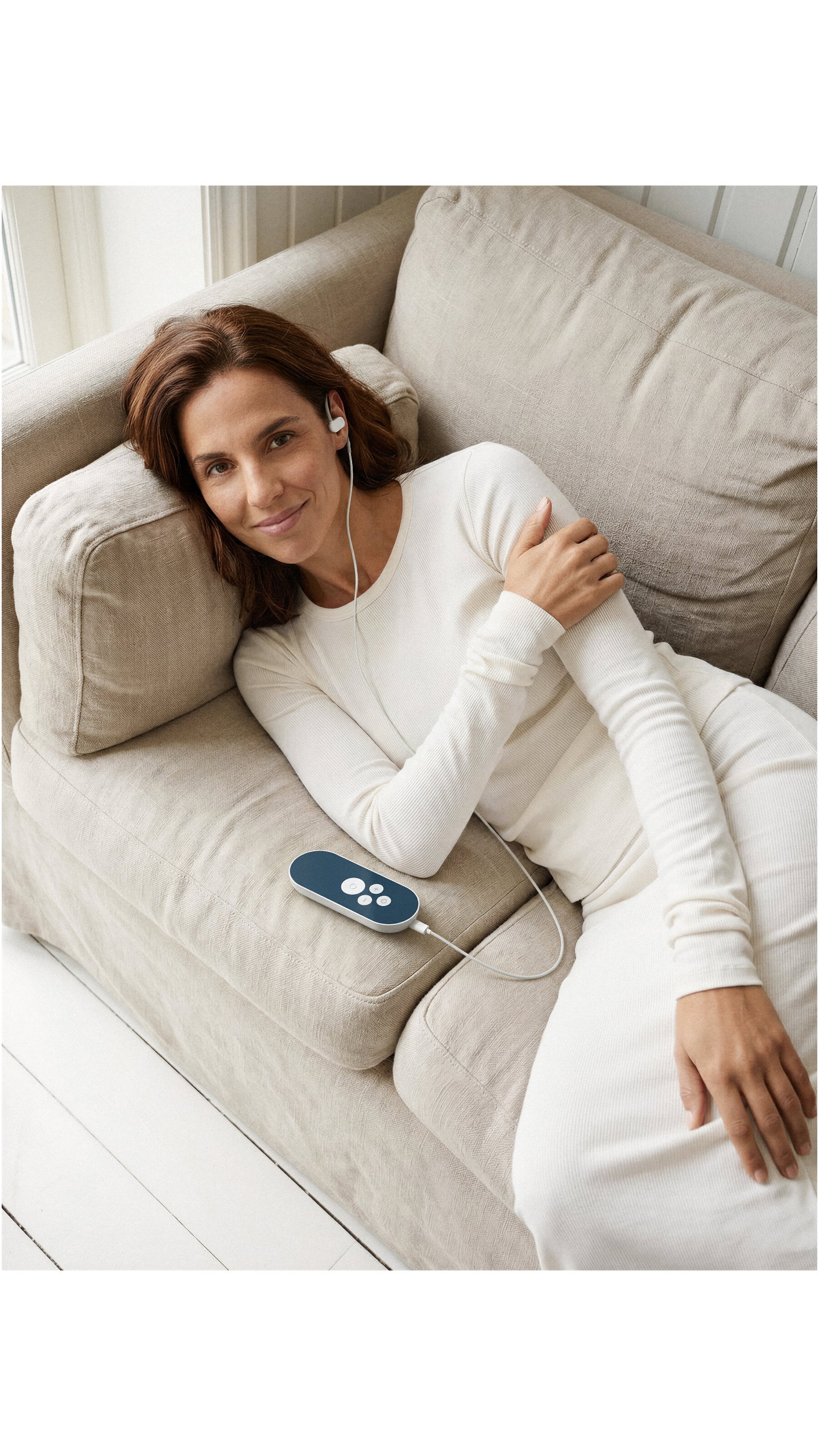
Wearable VNS devices require relatively little mental effort compared to a self-guided breathing or meditation practice. Nuropod, for example, is designed for repeatable at-home sessions: its earpiece sits on the tragus, the small flap just in front of the ear canal, and users adjust the level until they feel a light tingling. The convenience is a defined session, typically around 30 minutes, that needs no breath counting, active coaching, or constant technique adjustments.
A wearable device like this does not replace implanted or prescription VNS, and its guidance features do not automatically adjust stimulation settings based on real-time body signals. The practical appeal is structure: a routine that can be slotted into a morning coffee break, an evening wind-down, or a quiet moment at a desk, without needing to relearn a technique every time.
Symptoms That Need Medical Evaluation, Not Labels
Wellness language around the vagus nerve has become popular enough that it’s tempting to attach a “vagus nerve dysfunction” label to almost any physical or emotional symptom. This shortcut can actually delay proper care. Persistent fainting, abnormal heart rhythms, breathing problems, ongoing digestive symptoms, unexplained neurological changes, or severe mental-health symptoms should always prompt a conversation with a medical professional rather than a self-applied wellness label.
Calming practices and wearable vagus nerve stimulation devices are built to support everyday relaxation and nervous system regulation. They are not designed, and should not be relied upon, to diagnose or manage symptoms that fall outside normal day-to-day stress. When a symptom feels persistent, severe, or unfamiliar, a clinical evaluation should always come first.
Consistency Matters More Than Complexity
Across every option discussed, from slow breathing to a wearable ear device, one theme keeps repeating: showing up regularly matters more than finding a single best technique. A five-minute breathing practice done daily is likely to be more useful than an elaborate routine attempted once a month. The same logic applies to wearable devices, where the value comes from a repeatable session that fits naturally into an existing routine rather than a complicated new obligation.
Starting simple, choosing one method that feels sustainable, and paying attention to how the body responds over several weeks tends to produce more insight than jumping between five different approaches in a single week. For those ready to add a structured, low-effort option to a daily wellness routine, wearable vagus nerve stimulation is a reasonable next step toward building that consistency.
Disclaimer: Research referenced in this article was conducted using Parasym’s neuromodulation technology under research conditions. Findings relate to specific study populations and should not be interpreted as guaranteed individual outcomes. Nuropod is classified by the FDA as a non-significant risk device and is not intended to diagnose, treat, cure, or prevent any disease.
Nuropod by Parasym
press@nuropod.com
2108 N Street
Sacramento
California
95816
United States


